
Financial Vulnerabilities part 1/3
This month’s topic explores the “financial vulnerabilities as a self-employed artist.

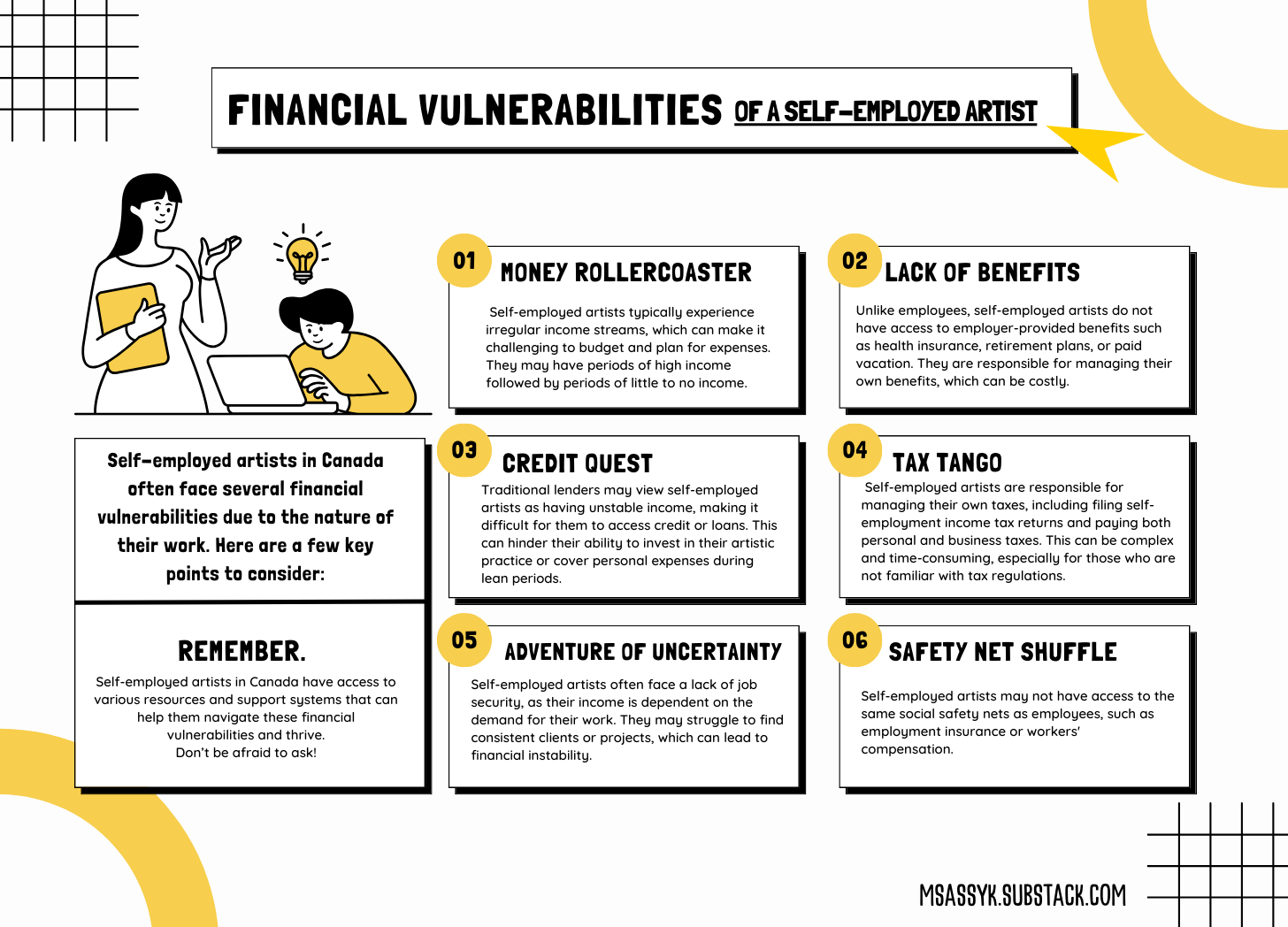
Not understanding the financial vulnerabilities of being a self-employed artist can lead to a wild ride of ups and downs. You might find yourself burning out from working just to survive, giving up on your passion for a "real job," or getting caught in a never-ending cycle of debt.
I'm here to shed some light on these overlooked challenges and help you navigate the exciting world of being a rogue artist. Get ready to view yourself as a business and embark on this mini-series with me.
Part 1: Money Behind the Magic - What They Don't Teach You in School
Part 2: Business Planning
- Living the Dream: What's a Livable Income for a Self-Employed Artist?
- Unleashing Your Creative Business Mindset
- Mastering the Art of Accounting & Rules
Part 3: Lessons Learned/Still learning
THE STUFF THEY DON’T TEACH YOU IN SCHOOL
Art school may have given you the foundation, work habits, and networking skills, but it forgot to mention the nitty-gritty of building a career and making money from your skills.
I think a lot of schools assume that their graduates will eventually end up in the corporate industry where there's an obvious ladder to climb. But what about those of us who love the freedom of project choice from a freelance career? (or had tough luck getting hired by a studio?)
I’m here to share some experience and fill in those gaps.
Here’s a small summary based on the animation/game industry in Canada, from personal experience.
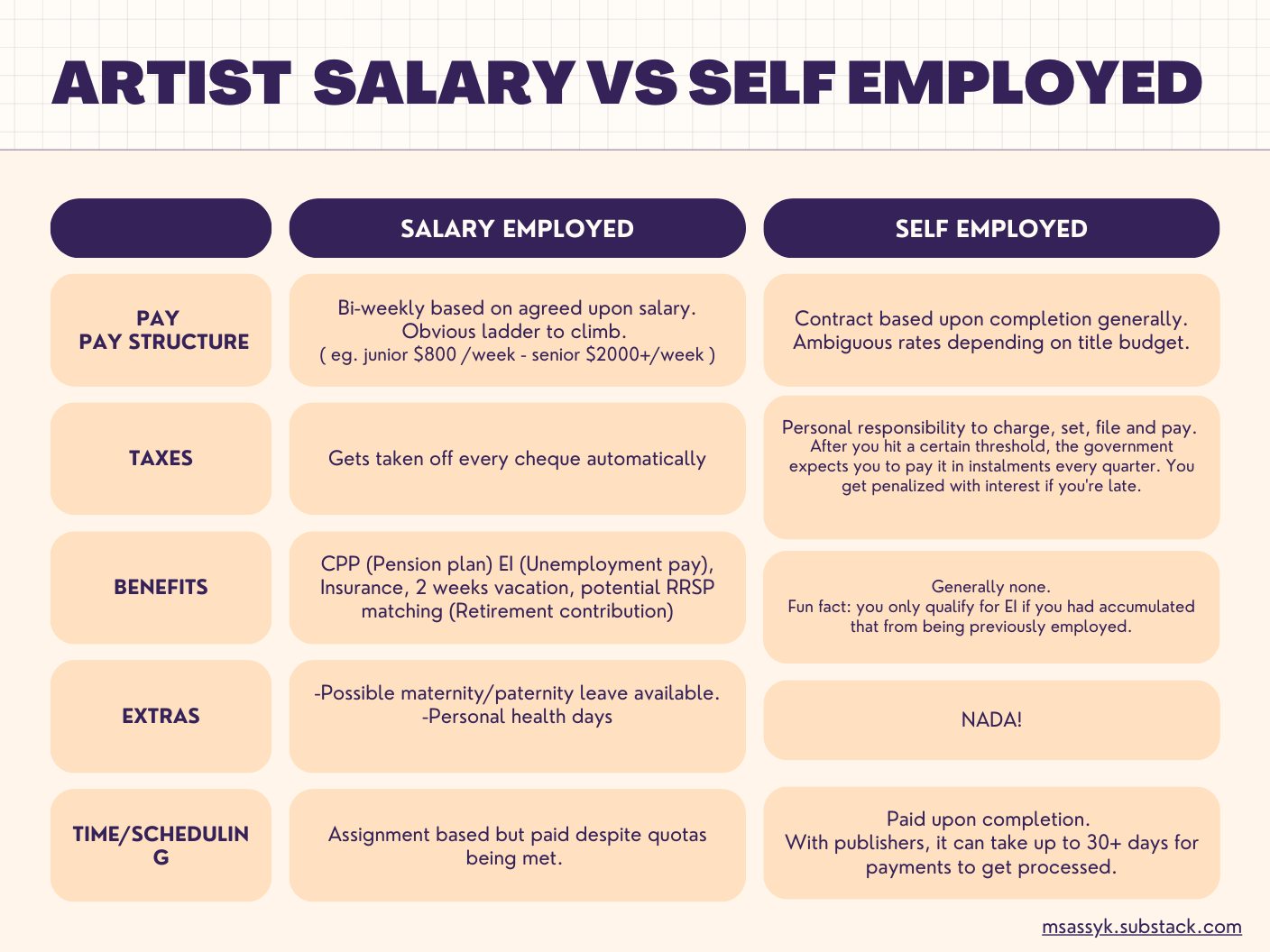
I’ve dabbled in both industries, but 98% of my experience is in the “self-employed”artist in comics, by choice.
I won’t go into the pros and cons for choosing this path as I believe the level of comfort with risk tied to a creative career is personal (and sometimes even rooted in upbringing and privilege).
What I can say is, what I’m about to share is learned through every mistake you could possibly make as a naive, self-employed creative.
MAKING A LIVING IN COMICS
COLOURING COMICS:
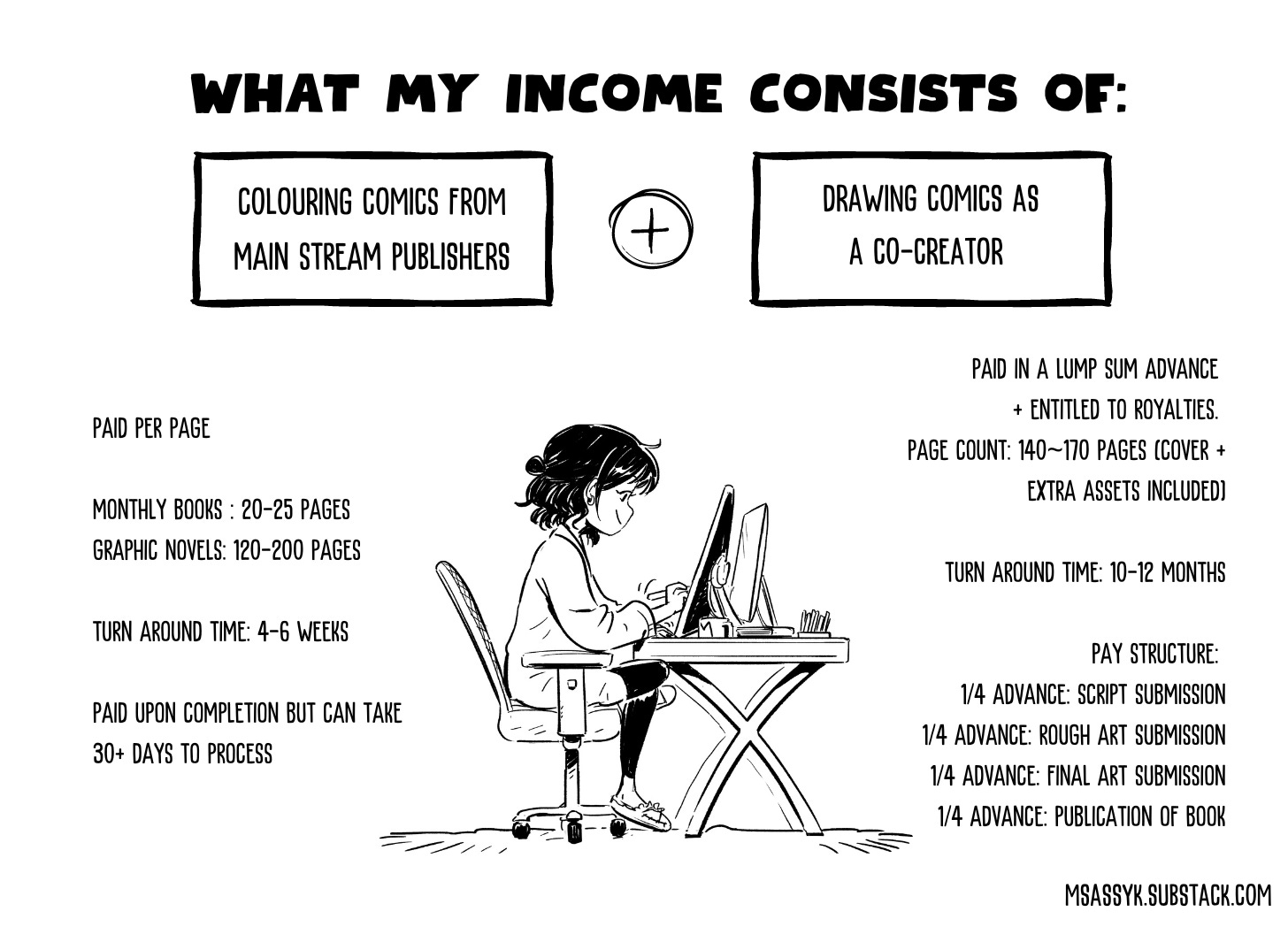
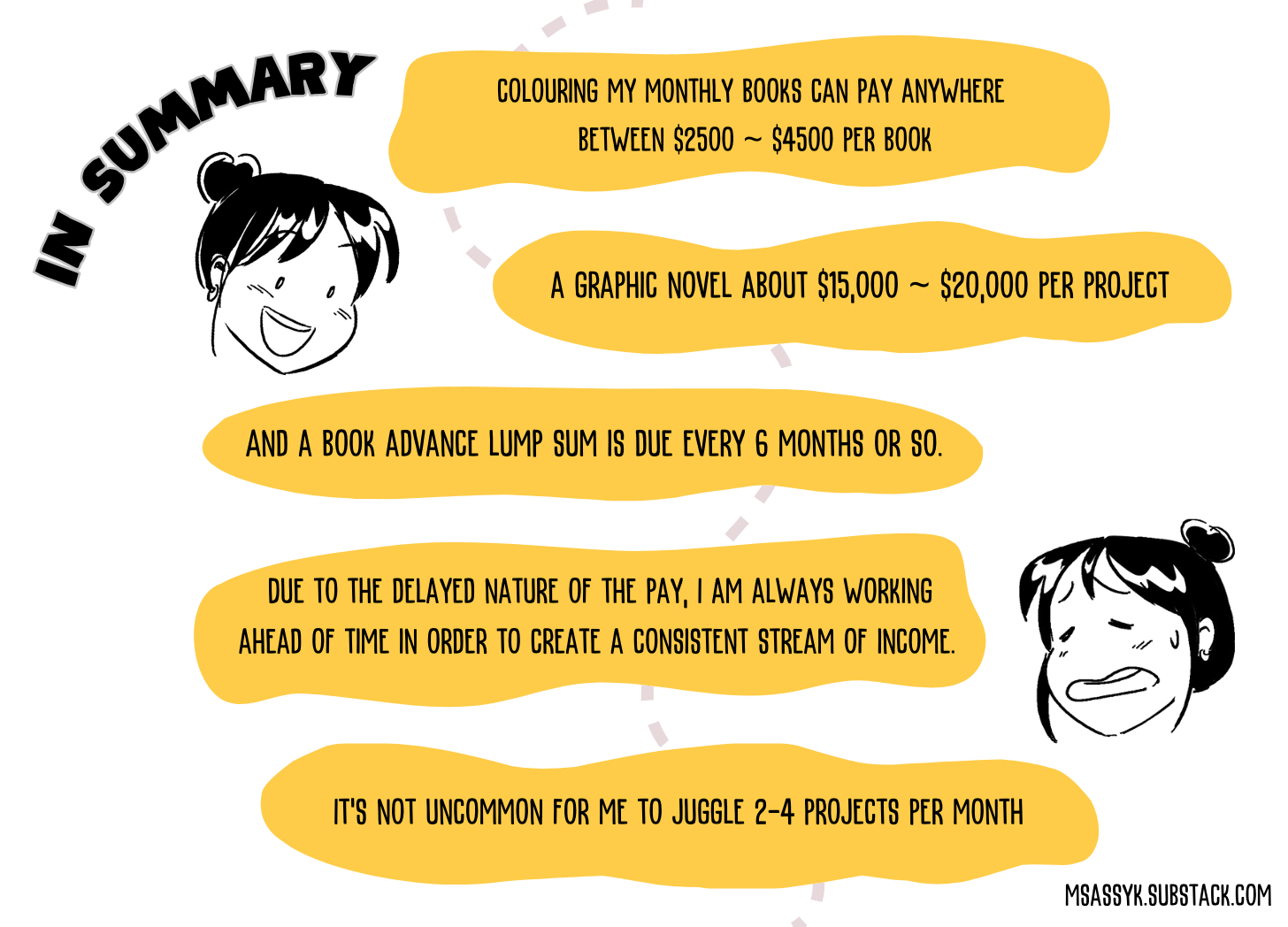
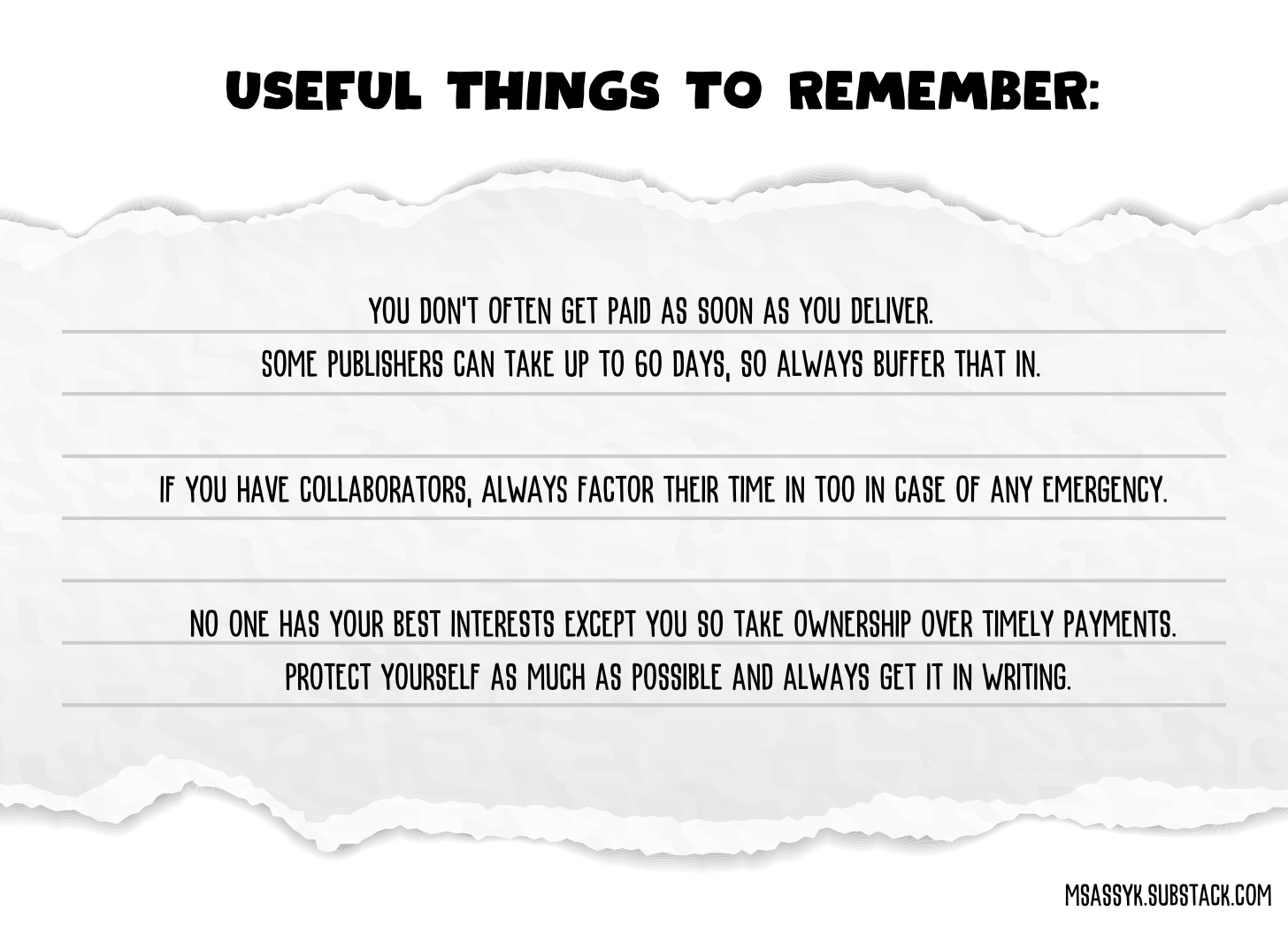
As a comic book colorist, you can expect a page rate ranging from $50 to $200 per page for each project. Monthly comics usually consist of 20-25 pages, while graphic novels can have 120-200 pages. The turnaround time for monthly comics is around 4-6 weeks, and payment is typically received after submitting the pages, with a processing time of 30 days or more.
DRAWING A CREATOR-OWNED COMIC:
In terms of drawing comics, my case is a little different from a work-for-hire job because it’s a creator owned project. My collaborator and I get paid an advance- divided into installments, agreed upon with the publisher.
Once your book's sales reach the amount of your advance, you'll start earning royalties, a small percentage of every unit sold. Publishers may also sell foreign rights, contributing to your advance.
Remember, it's crucial to discuss and include these payment terms in your contract before starting any job.
To be continued in …
Part 2: Business Planning as a self employed artist in Comics
- Financial Goal Setting
- Compounding : Productivity & Consistency over time
- Organizing
- Time Management
- Project Stacking
- Accounting
- The Buffer
Part 3: What I learned so far
Thank you for reading the first post about Financial Vulnerabilities of being a self-employed artist.
If you think anyone can benefit from this, please share it.
I love empowering new/old creatives with transparency.
See you in the next one.
-Michele